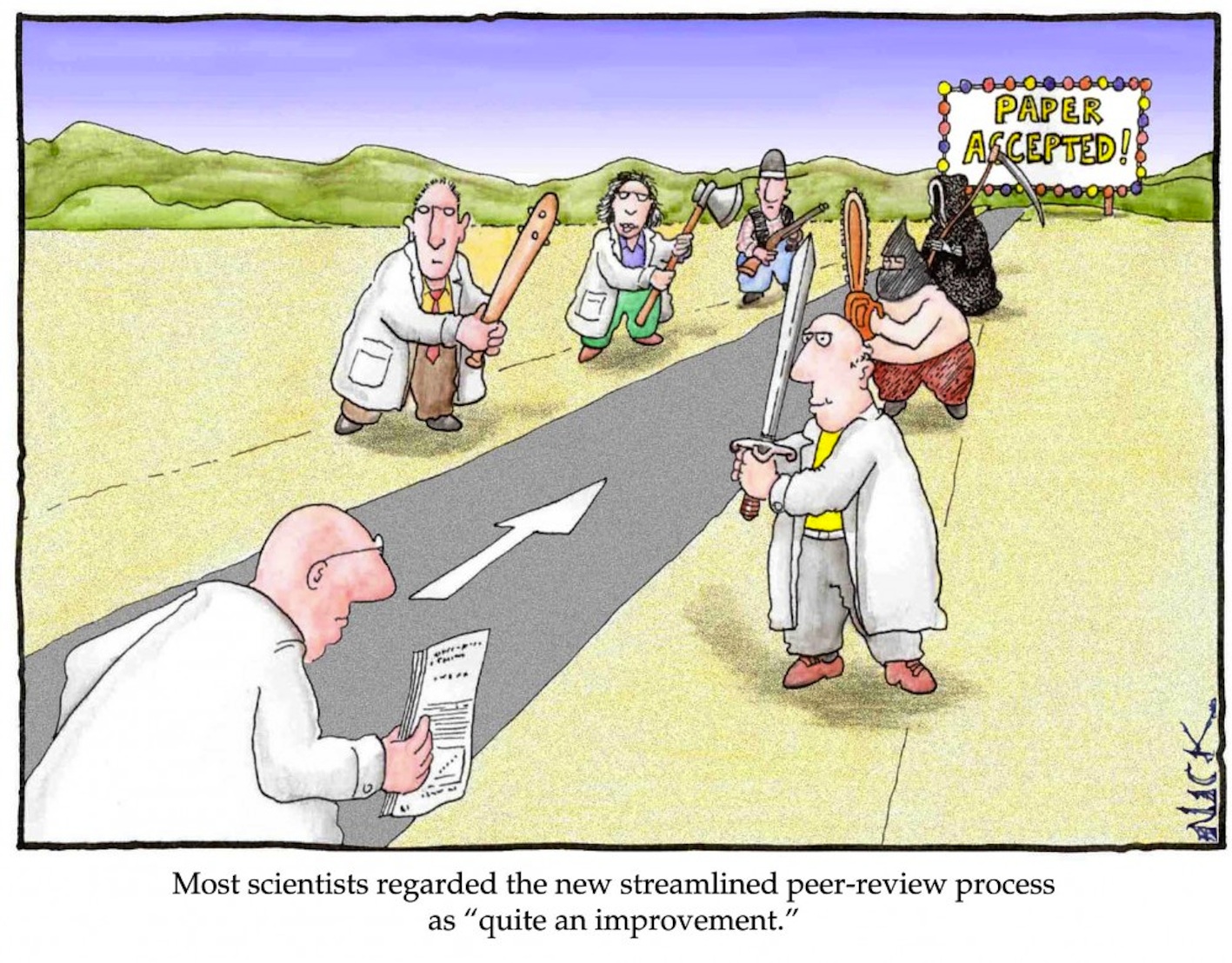
People keep falling into the same trap. They love monopolies, then are shocked when those monopolies jerk them around.
Everything published on arXiv could also be published on Zenodo, but not the other way around.
I don't see much of a monopoly, nor any "moat" apart from it being recognised. You can already post preprints on a personal website or on github, and there are "alternatives" such as researchgate that can also host preprints, or zenodo. There are also some lesser known alternatives even. I do not see anything special in hosting preprints online apart from the convenience of being able to have a centralised place to place them and search for them (which you call "monopoly"). If anything, the recognisability and centrality of arxiv helped a lot the old, darker days to establish open access to papers. There was a time when many journals would not let you publish a preprint, or have all kinds of weird rules when you can and when you can't. Probably still to some degree.
Could they not have made it into some legal structure that puts universities at the top? Say, with a bunch of universities owning shares that comprise the entirety of the ownership of arXiv, but that would allow arXiv to independently raise funds?
The article says that "it will become an independent nonprofit corporation", and as OpenAI's failed attempt showed, converting a non-profit to a for-profit organization is either really hard or impossible.
> Could they not have made it into some legal structure that puts universities at the top?
As a corporation (even a non-profit one), it will have a board of directors. I have no idea what their charter will look like, but I would be surprised if at least one seat wasn't reserved for a university representative, and more than that seems quite likely as well.
So if OpenAI with billions of dollars only partially succeeded at converting to a for-profit business, then that suggests that organizations with fewer resources (like arXiv) have much worse odds.
The reason is because arxiv is growing significantly leading to 297,000 deficit in operating costs for 2025 alone. Corenell has helped with donation a long with other organizations that pay membership fees.
As a result, donors + leaders of arxiv think it's best to spin off to increase funding.
Most people I talk to hate that pipeline and spend a lot of debug hours on it when Arxiv can't compile what overleaf and your local latex install can.
The reason authors like and use arxiv is that it gives 1) a timestamp, 2) a standardized citable ID, and 3) stable hosting of the pdf. And readers like the no-nonsense single click download of the pdf and a barebones consistent website look.
All else is a side show.
Spinning the service off forces other the labor out onto other universities rather than leaving them to solely Cornell
Arxiv doesn't need moderation. Nobody is asking for Arxiv moderation. It needs minimal checks to remove overtly illegal content.
Seems like a lot of people are asking for moderation. And moderation is a pretty big part of the existing offering[1].
No. Around half the cost is infrastructure. The other half of the cost is people. i.e. engineers to maintain infra and build mod tools for moderators to operate.
> Arxiv doesn't need moderation. Nobody is asking for Arxiv moderation.
This is just not true. Tons of people ask for arxiv to have moderation. Especially since covid, etc when antivaxxers and alternative medicine peddlers started trying to pump the medical categories of arxiv with quack science preprints and then go on to use the arxiv preprint and its DOI to take advantage of non academics who don't really understand what arxiv is other than it looks vaguely like a journal.
And doubly so now that people keep submitting AI generated slop papers to the service trying to flood the different categories so they can pad their resumes or CVs. And on top of that people who don't actually understand the fields they are trying to write papers in using AI to generate "innovative papers" that are completely nonsensical but vaguely parroting the terms of art.
The only reason you don't see more people calling for arxiv moderation is because they already spend so much time on it. If they were to stop moderating the site it would overflow into an absolute nightmare of garbage near overnight. And people wouldn't be upset with the users uploading this of course, they'd be upset with arxiv for failing to take action.
Moderation is inherently unappreciated because in the ideal form it should be effectively invisible (which arxiv's mostly is).
If you want to see the type of stuff that arxiv keeps out, go over to ViXrA [1] or you can watch k-theory's video [2] having fun digging through some of the quality posts that live over on that site.
This is a motte and bailey fallacy. The real question is about moderation with the goal of checking truth and the scientific content. Obviously illegal content and ddos type overloading attacks need to be blocked.
Very different philosophies are clashing here. Arxiv came about in an age of different zeitgeist. We may never get back to that moment.
Also, the "human review" is a simple moderation process [1]. It usually does not dig into the submission's scientific merits.
I've contracted into some consultancy teams which you could uncharitably describe as "15 people and $4mn/yr to create one PDF per month".
A critical component of the arXiv-CE project is moving our services entirely off of Cornell University’s infrastructure — this goal is also known as Milestone 1. Milestone 1 completion is projected for the end of fiscal year 2026.
Assume if you are a library, and every day, half baked so-called books brought to the librarians where they have to make sure it is meaningful, readable and printable, 3000 of them, they accept and put them in the right bookshelf, and entire internet reads every one of them on the shelf multiple times by the AI bots, search engines and researchers.
They are not only making a new library, they are also maintaining both and syncing two libraries because Cornell cannot handle the volume of access by bots.
It is not static. It is essentially running two ships side-by-side, and two ships need to appear as one from the outside. And, the new ship is still only half built. The new ship is being designed, and being built. 27 seems small to me.
Dollars? So 300 people's cable bill? That's basically nothing. They're spending too much, and it's still nothing, and the solution is going to be to privatize it and eventually loot it.
You can't hand out a collection plate and get $300K for Arxiv? Your local neighborhood church can. Civilization is obviously collapsing.
That is, it's not readily parseable, it really gives an insider term vibe - like this isn't for you if you don't already know what it means or how you should read or say it. It sort of reminds me of the overuse of latin and latinate terms generally in the old professions and, well, the academy.
Just always struck me as being somewhat at odds with the goal.
To me it's just a way to get out your work fast, so that there is already a trace of it on the Internets - nothing more and nothing less.
> That is, it's not readily parseable, it really gives an insider term vibe...
Isn't that normal with highly specialized research fields? I agree many papers could benefit from clearer wording, but working in a niche means you sometimes don't reach a broader audience
But I did justify and maybe to reword slightly, surely if one of the main drivers is opening up research, the brand name should be something that's less obscure and more accessible / understandable as to what it is on first sight?
Maybe arXiv evoking the word 'archive' with an ancient Greek twist does that for some, but it's clearly a bit cryptic for many, and if the point is to open up probably the brand should just be something much plainer.
Using a brand as a filter where you have to already know what it means to get it is exactly the opposite of what it's supposed to achieve.
Consider the most exclusive (successful) brands that exist. Even there, where exclusivity is a brand goal, none of them have this property of being obscure on first contact.
Its reasonable to have a tradeoff here to avoid cranks and now AI psychosis slop. You can still post on research gate and academia.edu or you own github page or webhosting.
Isn't that actually kindof a good brand signal for a repo of very specialized papers? "Fun with learning" in comic sans wouldn't help credibility.
The original service didn't even have a name, only a description, and it was amusingly hosted at xxx.lanl.gov. But LANL wasn't really interested in it, and the founder eventually left for Cornell. At that point, the service needed a domain name, but archive.org was already taken.
And besides, the name has Ancient Greek influences. A similar Latinate term might be something like "archive".
Google I'll grant you, though it's still pretty phonetic and easy to read. The other two not at all, they're incredibly well known instantaneously recognisable words.
another will need to rise to take its place.
To this end, they added an endorsement requirement this year: https://blog.arxiv.org/2026/01/21/attention-authors-updated-...
You need your favourite academic gatekeeper (= thesis advisor) to vouch for you in order to be allowed to upload.
Then AI slop gets flagged and the shame spreads through the graph. And flaggings need to have evidence attached that can again be flagged.
It's probably not perfect but in practice, it seems to have been enough to get rid of the worst crackpotty spam.
> arXiv requires that users be endorsed before submitting their first paper to arXiv or a new category.
can you think of a better one?
If we go back to "Only people that have been inducted into the community can publish science" we're effectively saying that only the high priests can accrue knowledge.
I say this knowing full well that we have a massive problem in science on sorting the wheat from the chaff, have had so for a VERY long time, and AI is flooding the zone (thank you political commentator I despise) with absolute dross.
The vacuum that arXiv originally filled was one of a glorified PDF hosting service with just enough of a reputation to allow some preprints to be cited in a formally published paper, and with just enough moderation to not devolve into spam and chaos. It has also been instrumental in pushing publishers towards open access (i.e., to finally give up).
Unfortunately, over the years, arXiv has become something like a "venue" in its own right, particularly in ML, with some decently cited papers never formally published and "preprints" being cited left and right. Consider the impression you get when seeing a reference to an arXiv preprint vs. a link to an author's institutional website.
In my view, arXiv fulfills its function better the less power it has as an institution, and I thus have exactly zero trust that the split from Cornell is driven by that function. We've seen the kind of appeasement prose from their statement and FAQ [1] countless times before, and it's now time for the usual routine of snapshotting the site to watch the inevitable amendments to the mission statement.
"What positive changes should users expect to see?" - I guess the negative ones we'll have to see for ourselves.
I think both sides could learn from the other. In the case of ML, I understand the desire to move fast and that average time to publication of 250-300 days in some of the top-tier journals can feel like an unnecessary burden. But having been on both sides of peer review, there is value to the system and it has made for better work.
Not doing any of it follows the same spirit as not benchmarking your approach against more than maybe one alternative and that already as an after-thought. Or benchmaxxing but not exploring the actual real-world consequences, time and cost trade offs, etc.
Now, is academic publishing perfect? Of course not, very very far from it. It desperately needs to be reformed to keep it economically accessible, time efficient for both authors, editors and peer reviewers and to prevent the "hot topic of the day" from dominating journals and making sure that peer review aligns with the needs of the community and actually improves the quality of the work, rather than having "malicious peer review" to get some citations or pet peeves in.
Given the power that the ML field holds and the interesting experiments with open review, I would wish for the field to engage more with the scientific system at large and perhaps try to drive reforms and improve it, rather than completely abandoning it and treating a PDF hosting service as a journal (ofc, preprints would still be desirable and are important, but they can not carry the entire field alone).
The current balance where people wrote a paper with reviers in mind, upload it to Arxiv before the review concludes and keep it on Arxiv even if rejected is a nice balance. People get to form their own opinion on it but there is also enough self-imposed quality control on it just due to wanting it to pass peer review, that even if it doesn't pass peer review, it is still better than if people write it in a way that doesn't care or anticipate peer review. And this works because people are somewhat incentivized to get peer reviewed official publications too. But being rejected is not the end of the world either because people can already read it and build on it based on Arxiv.
The problem is that "optimizing for peer-review" is not the same thing as optimizing for quality. E.g., I like to add a few tongue-in-cheeks to entertain the reader. But then I have to worry endlessly about anal-retentive reviewers who refuse to see the big picture.
If peer review were to go away, this whole academic system would get into a crisis. It's dysfunctional and has many problems but it's kinda load bearing for the system to chug along.
Maybe we can go back to very opinionated “true” academia,
where there are institutional gatekeepers,
but they mostly get it right on who to award (and not),
vs the current game of
“whoever plays ball with funding sources the best = the best academic”,
which is obviously bullshit.
in much earlier institutions of knowledge and excellence,
the only transparent metric was whether or not they approved you.
and indeed we’re already left with all of the things claimed - the worst of both worlds, really.
I think it comes down to how the system is structured and how many players there are. The more difficult it is for a small cult to capture control of the funding (or access to instrumentation or awarding of degrees or whatever) for a given area the less likely you are to end up with a monoculture.
Assuming the majority of the funding continues to come from governments then you have a centralized point of leverage that can shape the system. So it should be possible to impose constraints that result in a system that actively prevents monocultures from developing.
Others (at least in chemistry) will accept it, but it raises concern if a paper is only available as a preprint.
The arXiv vs journal debate seems a lot like 'should the work get done, or should the work get certified' that you see all over 'institutions', and if the certification does not actually catch frauds or errors, it's not making the foundations stronger, which is usually the only justification for the latter side.
Responding largely to the linked article, you can't just ignore the massive increase in funding and associated output that occurred. Scaling almost any system up will be expected to result in creative new failure modes. It's easy to observe that a system isn't great and suppose that removing it would improve things but this very often isn't the case. Democracy is one such example.
There's also the publishing ecosystem that developed around the increased funding. It isn't clear to me why any blame (if it's even valid, see preceding paragraph) should be laid at the feet of the practice of peer reviewing publications rather than such an obviously dysfunctional institution.
Even if we accept the way in which publications have been undergoing peer review to somehow be the root of all evil (as opposed to the for profit publication of taxpayer funded work) - there's more than one way to go about it! A glaringly obvious problem, mentioned in the linked article yet not meaningfully addressed that I saw, is that peer reviewers aren't paid. If this was a compensated task presumably it would be performed much more rigorously. Building inspectors aren't volunteers and they seem to do a good enough job.
What possible value does a journal like Nature, for example, bring to the table by claiming a paper for themselves and charging people for it, given the alternative?
I don't see any value there. Maintaining an exclusive clique by using artificial scarcity while coasting on the dregs of reputation remaining to a once prestigious institution is what a lot of these journals are doing.
The world has changed. There's no need for that sort of pay to play gatekeeping, and in fact, the model does tremendous damage to academic and intellectual integrity. It allows people to get away with fraud and it makes the institutions motivated to hide and cover it up so as to not damage their own reputations by admitting anything slipped by them.
If you contrast the damage done by journals, with regards to suppressed research, gatekept access, money taken from researchers and readers alike, against the value they might plausibly provide, the answer is clear.
They're not needed anymore. The AI era, since 2017, has thoroughly demonstrated that journals are materially incapable of keeping up, that they're unable to meaningfully contribute to the field, and that their curation or other involvement has no effective practical value. The same is true for other fields, but everyone involved wants to keep their piece of the grift going as long as possible.
We don't need them, anymore. I suspect we never did.
Politicians, administrators, donors, and taxpayers don't want scientists deciding on their own how to spend the money. They want control over what gets funded. They want funding decisions with justifications they can understand. But they don't understand the science itself, so they need "objective" metrics to support the decisions. And because those metrics matter, people will inevitably game them.
Personally I think this resource mismatch can help drive creative choice of research problems that don’t require massive resources. To misquote Feynman, there’s plenty of room at the bottom
Good riddance! But not relevant in the least.
There were quit a few off them--by number of starts per year per person Caltech was actually generating startups at a higher rate than Stanford. But almost none of those Caltech startups were doing anything that would bring them to the public's attention, or even to the average HN reader's attention.
For example one I remember was a company developing improved ion thrusters for spacecraft. Another was doing something to automate processing samples in medical labs.
Also almost none of them were the "undergraduates drop out to form a company" startup we often hear about, where the founders aren't actually using much that they actually learned at the school, with the school functioning more as a place that brought the founders together.
The Caltech startups were most often formed by professors and grad students, and sometimes undergraduates that were on their research team, and were formed to commercialize their research.
My guess is that this is how it is at a lot of universities.
You get ahead as an academic computer scientist, for instance, by writing papers not by writing software. Now there really are brilliant software developers in academic CS but most researchers wrote something that kinda works and give a conference talk about it -- and that's OK because the work to make something you can give a talk about is probably 20% of the work it would take to make something you can put in front of customers.
Because of that there are certain things academic researchers really can't do.
As I see it my experience in getting a PhD and my experience in startups is essentially the same: "how do you do make doing things nobody has ever done before routine?" Talk to people in either culture and you see the PhD students are thinking about either working in academia or a very short list of big prestigious companies and people at startups are sure the PhDs are too pedantic about everything.
It took me a long time of looking at other people's side projects that are usually "I want to learn programming language X", "I want to rewrite something from Software Tools in Rust" to realize just how foreign that kind of creative thinking is to people -- I've seen it for a long time that a side project is not worth doing unless: (1) I really need the product or (2) I can show people something they've never seen before or better yet both. These sound different, but if something doesn't satisfy (2) you can can usually satisfy (1) off the shelf. It just amazes me how many type (2) things stay novel even after 20 years of waiting.
It is an interesting instance of the rule of least power, https://en.wikipedia.org/wiki/Rule_of_least_power.
People think, for instance, that RDFS and OWL are meant to SHACL people into bad an over engineered ontologies. The problem is these standards add facts and don’t subtract facts. At risk of sounding like ChatGPT: it’s a data transformation system not a validation system.
That is, you’re supposed to use RDFS to say something like
?s :myTermForLength ?o -> ?s :yourTermForLength ?o .
?s :lengthInFeet ?o -> ?s :lengthInInches 12*?o .
Similarly the problem of ordered collections has never been dealt with properly in that world. PostgreSQL, N1QL and other post-relational and document DB languages can write queries involving ordered collections easily. I can write rather unobvious queries by hand to handle a lot of cases (wrote a paper about it) but I can’t cover all the cases and I know back in the day I could write SPAQL queries much better than the average RDF postdoc or professor.
As for underengineering, Dublin Core came out when I worked at a research library and it just doesn’t come close in capability to MARC from 1970. Larry Masinter over at Adobe had to hack the standard to handle ordered collections because… the authors of a paper sure as hell care what order you write their names in. And it is all like that: RDF standards neglect basic requirements that they need to be useful and then all the complex/complicated stuff really stands out. If you could get the basics done maybe people would use them but they don’t.
This just isn't true. arXiv is not a venue. There's no place that gives you credit for arXiv papers. No one cares if you cite an arXiv paper or some random website. The vast vast majority of papers that have any kind of attention or citations are published in another venue.
The paper you link to counts as a publication, but its reputation stands on its own, it has nothing to do with arXiv as a venue. Ideally, that's how it is for all papers, but it isn't, just by publishing in certain venues your paper automatically gets a certain amount of reputation depending on the venue.
We require a method of filtering such that a given researcher doesn't have to personally vet in excruciating detail every paper he comes across because there simply isn't enough time in the day for that.
Ideally such a system would individually for each paper provide a multi-dimensional score that was reputable. How can those be calculated in a manner such that they're reputable? Who knows; that exercise is left for the reader.
In practice "well it got published in Nature" makes for a pretty decent spam filter followed by metrics such as how many times it's been cited since publication, checking that the people citing it are independent authors who actually built directly on top of the work, and checking how many of such citing authors are from a different field.
PageRank was a decent solution for websites. Can't we treat citations as a graph, calculate per-author and per-paper trustworthiness scores, update when a paper gets retracted, and mix in a dash of HN-style community upvotes/downvotes and openly-viewable commentary and Q&A by a community of experts and nonexperts alike?
Just one example off the top of my head. How do you handle negative citations? For example a reputable author citing a known incorrect paper to refute it. You need more metadata than we currently have available.
tl;dr just draw the rest of the fucking owl.
Upvotes, downvotes, and commentary? That's extremely complicated. Long term data persistence? Moderation? Real names? Verification of lab affiliations? Who sets the rules? How do you cope with jurisdictional boundaries and related censorship requirements? The scientific literature is fundamentally an open and above all international collaboration. Any sort of closed, centralized, or proprietary implementation is likely to be a nonstarter.
Thus if your goal is a universal system then I'm fairly certain you need to solve the decentralized social networking problem as a more or less hard prerequisite to solving the decentralized scientific literature review problem. This is because you need to solve all the same problems but now with a much higher standard for data retention and replication.
Very topically I assume you'd need a federated protocol. It would need to be formally standardized. It would need a good story for data replication and archival which pretty much rules out ActivityPub and ATProto as they currently stand so you're back to the drawing board.
A nontrivial part of the above likely involves also solving the decentralized petname system problem that GNS attempts to address.
I think a fully generalized scoring or ranking system is exceedingly unlikely to be a realistic undertaking. There's no problem with isolated private venues (ie journals) we just need to rethink how they work. Services such as arxiv provide a DOI so there's nothing stopping "journals" that are actually nothing more than lightweight review platforms that don't actually host any papers themselves from being built.
No, it is not. Don't throw the baby out with the bath water. Zenodo is centralized, and that is fine. A system hosted by CERN would be universal enough for most purposes.
The truth is, most papers cannot stand on their own, they need a reputable venue. While it is difficult to get into Nature, it is much more difficult to actually contribute something substantial to science. That's why we don't have a system like that.
That said, I disagree that papers require a centralized venue in any fundamental sense. They currently need such a venue because we don't have a better process for vetting and filtering them at scale. The issue is that decentralizing such a process in an acceptable manner is a monstrously complicated prospect.
We do require such a method. Isn't that what AI is for? Strictly working as a filter. You still need to personally vet in excruciating detail every paper you rely on for your work.
In my experience as a publishing scientist, this is partly because publishing with "reputable" journals is an increasingly onerous process, with exorbitant fees, enshittified UIs, and useless reviews. The alternative is to upload to arXiv and move on with your life.
But yes it’s a people problem, not an arxiv problem.
I've read papers in the chemical literature that were clearly thinly veiled case studies for whatever instrument or software the authors were selling. Hell, I've read papers that had interesting results, only to dig into the math and find something fundamentally wrong. The worst was an incorrect CFD equation that I traced through a telephone game of 4 papers only to find something to the effect of "We speculate adding $term may improve accuracy, but we have not extensively tested this"
Just because something passed peer review does not make it a good paper. It just means somebody* looked at it and didn't find any obvious problems.
If you are engaged in research, or in a position where you're using the scientific literature, it is vital that you read every paper with a critical lens. Contrary to popular belief, the literature isn't a stone tablet sent from God. It's messy and filled with contradictory ideas.
*Usually it's actually one of their grad students
arXiv has become a target for grifters in other domains like health and supplements. I’ve seen several small scale health influencers who ChatGPT some “papers” and then upload them to arXiv, then cite arXiv as proof of their “published research”. It’s not fooling anyone who knows how research work but it’s very convincing to an average person who thinks that that they’re doing the right thing when they follow sources that have done academic research.
I’ve been surprised as how bad and obviously grifty some of the documents I’ve seen on arXiv have become lately. Is there any moderation, or is it a free for all as long as you can get an invite?
Bibliometrics reveal that they are highly cited. Internal data we had at arXiv 20 years ago show they are highly read. Reading review papers is a big part of the way you go from a civilian to an expert with a PhD.
On the other hand, they fall through the cracks of the normal methods of academic evaluation.
They create a lot of value for people but they are not likely to advance your career that much as an academic, certainly not in proportion to the value they create, or at least the value they used to create.
One of the most fun things I did on the way to a PhD was writing a literature review on giant magnetoresistance for the experimentalist on my thesis committee. I went from knowing hardly anything about the topic to writing a summary that taught him a lot he didn't know. Given any random topic in any field you could task me with writing a review paper and I could go out and do a literature search and write up a summary. An expert would probably get some details right that I'd get wrong, might have some insights I'd miss, but it's actually a great job for a beginner, it will teach you the field much more effectively than reading a review paper!
How you regulate review papers is pretty tricky. If it is original research the criterion of "is it original research" is an important limit. There might already be 25 review papers on a topic, but maybe I think they all suck (they might) and I can write the 26th and explain it to people the way I wish it was explained to me.
Now you might say in the arXiv age there was not a limit on pages, but LLMs really do problematize things because they are pretty good at summarization. Send one off on the mission to write a review paper and in some ways they will do better than I do, in other ways will do worse. Plenty of people have no taste or sense of quality and they are going to miss the latter -- hypothetically people could do better as a centaur but I think usually they don't because of that.
One could make the case that LLMs make review papers obsolete since you can always ask one to write a review for you or just have conversations about the literature with them. I know I could have spend a very long time studying the literature on Heart Rate Variability and eventually made up my mind about which of the 20 or so metrics I want to build into my application and I did look at some review papers and can highlight sentences that support my decisions but I made those decisions based on a few weekends of experiments and talking to LLMs. The funny thing is that if you went to a conference and met the guy who wrote the review paper and gave them the hard question of "I can only display one on my consumer-facing HRV app, which one do I show?" they would give you that clear answer that isn't in the review paper and maybe the odds are 70-80% that it will be my answer.
In the typical "experimental report" sort of paper, the focus is typically narrowed to a knifes edge around the hypothesis, the methods, the results, and analysis. Yes, there is the "Introduction" and a "Discussion", but increasingly I saw "Introductions" become a venue to do citation bartering (I'll cite your paper in the intro to my next paper if you cite that paper in the intro to your next paper) and "Discussion" turn into a place to float your next grant proposal before formal scoring.
Review papers, on the other hand, were more open to speculation. I remember reading a number that were framed as "here's what has been reported, here's what that likely means...and here's where I think the field could push forward in meaningful ways". Since the veracity of a review is generally judged on how well it covers and summarizes what's already been reported, and since no one is getting their next grant from a review, there's more space for the author to bring in their own thoughts and opinions.
I agree that LLMs have largely removed the need for review papers as a reference for the current state of a field...but I'll miss the forward-looking speculation.
Science is staring down the barrel of a looming crisis that looks like an echo chamber of epic proportions, and the only way out is to figure out how to motivate reporting negative results and sharing speculative outsider thinking.
On one hand I'm the person who implemented the endorsement system for arXiv. I also got a PhD in physics did a postdoc in physics then left the field. I can't say that I was mistreated, but I saw one of the stars of the field today crying every night when he was a postdoc because he was so dedicated to his work and the job market was so brutal -- so I can say it really hurts when I see something that I think belittles that.
On the other hand I am very much an interested outsider when it comes to biosignals, space ISRU, climate change, synthetic biology and all sorts of things. With my startup and hackathon experience it is routine for me to go look at a lot of literature in a new field and cook it down and realize things are a lot simpler than they look and build a demo that knocks the socks off the postdocs because... that's what I do.
But Riemann Hypothesis, Collatz, dropping names of anyone who wrote a popular book, I don't do that. What drives me nuts about crackpots is that they are all interested in the same things whereas real scientists are interested in something different. [1] It was a big part of our thinking about arXiv -- crackpot submissions were a tiny fraction of submission to arXiv but they would have been half the submissions to certain fields like quantum gravity.
I've sat around campfires where hippies were passing a spliff around and talking about that kind of stuff and was really amused recently when we found out that Epstein did the thing with professors who would have known better -- I mean, I will use my seduction toolbox to get people like that to say more than they should but not to have the same conversation I could have at a music festival.
[1] e.g. I think Tolstoy got it backwards!
Just some very outsider thought:
Could it be that this problem is rather self-inflected by researchers and their marketing?
Physicists market all the time that resolving these questions about quantum gravity will give the answers to the deepest questions that plagued philosophers over millenia. Well, such a marketing attracts crackpots who do believe that they have something to tell about such topics.
Relatedly, to improve their chances of getting research funding, a lot of researchers do an outreach to the general public to show the importance of the questions that they work on. Of course this means that people from the general pyblic who now get interested in such questions will make their own attempt to make a contribution because - well, this researcher just told me how important it is to think about such questions. Of course such a person from the general public typically does not have the deep scientific knowledge such that their contribution meets the high scientific standards.
This has been a common practice in physics, especially the more theoretical branches, since the inception of arXiv. Senior researchers write a paper draft, and then send copies to some of their peers, get and incorporate feedback, and just submit to arxiv.
It works for physics because physicists are very rigorous. So papers don't change very much. It also works for ML because everyone is moving very fast that it's closer to doing open research. Sloppier, but as long as the readers are other experts then it's generally fine.
I think research should really just be open. It helps everyone. The AI slop and mass publishing is exploiting our laziness; evaluating people on quantity rather than quality. I'm not sure why people are so resistant to making this change. Yes, it's harder, but it has a lot of benefits. And at the end of the day it doesn't matter if a paper is generated if it's actually a quality paper (not in just how it reads, but the actual research). Slop is slop and we shouldn't want slop regardless. But if we evaluate on quality and everything is open it becomes much easier to figure out who is producing slop, collision rings, plagiarist rings, and all that. A little extra work for a lot of benefits. But we seem to be willing to put in a lot of work to avoid doing more work
Junior researchers don't have these typically. They also benefit more from anonymous feedback, which enables the reviewers to bluntly identify wrong or close to wrong results. So I think open journals should continue to exist. They fill an essential role in the scientific ecosystem.
I want reviews of my papers! But I want reviews by people who care. I don't want reviews by people who don't want to review. I don't want reviews by people who think it's their job to reject or find flaws in the work. I want reviews by people who care. I want reviews by people who want to make my work better. I want reviews by people who understand all works are flawed and we can't tackle every one in every paper (the problem isn't solved, so there's always more!).
So low bars. Forget the prestige, citation count, novelty, and all the bullshit and just focus on the actual work and that the act of publishing is about communicating. Publishing is the main difference between private and public labs. Private labs do fine research, without all the formal review. It's just that nobody learns about it. They don't give back to the community.
So my ideal system still has reviewers, journals, and conferences but I think we'd get along just fine without them. I believe that if we can't recognize that then we can't use these other tools to make things better.
They aren't fundamental tools needed to make the process work, they're tools that can make the process work better. But I'm not convinced they're doing a good job of that right now.
I think when you think about publishing as what it actually is, researchers communicating to researchers, what I said makes much more sense. I do think formal review does help reduce slop but I think anyone who has published anything is also very aware of how noisy the system is and how good works get rejected or delayed because they aren't "novel" enough.
Honestly, my ideal system is journals with low bars. We forget this prestige bullshit and silliness of novelty (often it's novel to niche experts but not to others) and basically check if it looks like due diligence was done, there's not things obviously wrong, no obvious plagiarism, and then maybe a little back and forth to help communicate. But I think we've gotten too lost in this idea of needing to punish fast and that it has to be important. Important to who? Tons of stuff is only considered important later, we've got a long track record of not being so great at that. But we have a long track record of at least some people working on what we later find out is important.
I like Arxiv better. I get the paper, know it's probably not reviewed (like in many journals), and review it if I want to. I used to ise Citeseerx, too, to get tons of CompSci papers. Even better, OpenReview might have some good observations.
what are you referring to, who is being appeased who shouldn't be? what are you worried about happening?
I am wary of that. IMO the business model is damaged therein. You can say in 2022 we had 27; bankrupt in 2030.
OpenAI shows exactly how well that works and what that kind of governance does to a company and to its support of science and the commons.
TL;DR, it's fucked.
Is a mid-to-high engineering salary outlandish for a CEO of what is likely to be a fairly major non-profit? Even non-profits have to be somewhat competitive when it comes to salary, and the ideal candidate is likely someone who would be balancing this against a tenured position at a major university
It is actually quite common to come across HAL in subfields of mathematics in my experience.
Can you elaborate on that?
And while academic salaries are generally not great, tenured professors at big universities tend to make a fair bit (plus a lot more vacation time and perks than is normal in the US)
On the other hand, a CEO of a well-known nonprofit might command that kind of salary in Ohio. People often underestimate how much the leaders of nonprofits pay themselves.
However, even a small percentage of bad actors finding a way to inflate their salaries will, as a side effect, inflate salaries across the board because it influences the process that sets the salaries for the honest organizations.
It's a fun problem.
I stand by the point of my original post: People often underestimate how much the leaders of nonprofits pay themselves. These are figures you can look up and quiz your friends to test the hypothesis, if they’re into that sort of thing. For a good time include some nonprofit hospitals.
It's still the land of opportunities. It's easier to find ways to reduce your living costs than ways to increase your salary.
So if this is correct, then even in Switzerland, it seems like $300,000 per year would be an obscenely high salary for a senior developer.
Even if we scope it to SWE, I don't think that's far off the US percentiles.
In London I imagine the top 10% SWE is not even 100k GBP. In Germany even worse.
I can not imagine what one could possibly need $300,000 per year for unless an apartment costs like $200,000 per year.
Not really a tenable long-term situation for a senior employee with plans to start a family. Family homes of decent size and area are literally millions of dollars.
Besides, I did already say that everyone else was underpaid relative to costs. But that's not unique to the Bay Area. Cost of housing relative to income is terrible in almost all of the major European cities too.
Once cities become wealthy enough to develop a home owning class, they seem to cease being able to provision adequate housing supply in general.
Bigger problem in the SF area is that a bunch of folks who owned property before the gold rush have ended up real-estate-rich, and formed a voting block that actively prevents the construction of new housing (on the basis that it might devalue their accidental real estate investment)
No one is sitting around and setting salaries based on the intrinsic human dignity of the people working jobs.
Being able to afford unpredictable expenses and not have it bankrupt you. In the US, that would include healthcare. Everywhere in the world, that would be useful if you were laid off.
When I used to visit the Meta campus in Menlo Park, the QA folk I worked with were commuting 2 hours each way just to be able to afford housing. I've no idea how far away the janitorial staff must have lived to do the same
To some extent, maybe, but often not. For example, London has similar cost of living to the Bay Area, and when I was at Meta experienced folks like Dan Abramov over in London were making about the same as fresh college hires in Menlo Park...
To be fair though, Dan specifically is kind of notorious for messing up his comp negotiation. Did you not see the Twitter pile on at the time?
Indeed, but having seen the infamous spreadsheet, he didn't have all that much headroom (unless he agreed to move to the US)
Sure, but the cost of living there is significantly higher as well. Anyway, I can hardly even comprehend these kinds of sums, though I am a bit of an outlier, as I earn around $27,700 as an SWE in Europe, which is low even by the standards of companies in my own country.
The US is huge though, and the cost of living is astronomically lower outside of those big tech hub cities. I live in a tiny town in the midwest with a big house and a big yard that we bought for $89k USD in 2016[†]. I'm able to support myself and my wife comfortably on just my (self-employed) SWE salary.
[†] Real estate inflation index for our area says the house would have cost us around $130-$150k USD in 2026.
I just moved to SV a few months ago from the Midwest (and not a particularly cheap part of it). Telling my coworkers who aren't from the US what a house costs in Wisconsin, you'd have thought I was the one who moved from a foreign country.
It does heavily cluster around SV, for sure, but Seattle/NewYork/Boston/Arlington will all get you there, and Chicago/Austin/etc aren't all that far behind at this point
The local college and medical administrators are the ones that own the mansions in my city. I have a family, house and mortgage plus my large medical expenses (cardiac) I can handle...until I cant.
For reference, I just left a position in the Midwest for a job in SV that pays a little more than you're getting paid. $250 but with Midwestern rent would be life-changing. Sounds like we're in very different stages of our careers, though.
The city manager of a small city in Texas gets paid around that much and that's taxpayer money.
Now what collegiate football coaches are paid, that's pretty crazy.
Though, saying that, I suppose all the reputation data is kind of public. Apart from emails/accounts.
It’s even less. I would bet if it’s not now, for the vast majority of its life it was a machine at someone’s desk at Cornell.
I had a copy of the whole thing under my desk though in Olin Library on a Pentium 3 machine from IBM that was built like a piece of military hardware. In April the sun would shine in the windows of my office, the HVAC system was unable to cool my office, and temperatures would soar above 100F and I'd be sitting there in a tank top and drinking a lot of water and sports drinks and visitors would ask me how I could stand it.
https://mastodon.social/@UP8/116086491667959840
I could even make those cards tradeable like NFTs, use DynamoDB as the ledger, and not worry about the cost at all.
On the other hand if you are talking about something bandwidth heavy forget about AWS. Video hosting with Cloudfront doesn't seem that difficult, even developing a YouTube clone where anybody could upload a video and it gets hosted seems like a moderate sized project. But with the bandwidth meter always running that kind of system could put you into the poorhouse pretty quickly if it caught on. Much of why YouTube doesn't have competition is exactly that: Google's costs are very low and they have an established system of monetization.
I am keeping my photo albums on Behance rather than self-hosting because I lost enough money on a big photo site in AWS that it drove my wife furious and it took me a few years to pay off the debt.
I’m sorry what. This is supposed to persuade me?
arXiv does not need to and should not optimize for “shareholder value”, which is at least nominally the justification for outlandish CEO pay packages.
In reality you could host the entire thing for well under $50k/year in hardware and storage if someone else is providing a free CDN. Their costs could be incredibly low.
But just like Wikipedia I see them very likely very quickly becoming a money hole that pretends to barely be kept afloat from donations. All when in reality whats actually happening is that its a ridiculous number of rent seekers managed to ride the coattails of being the defacto preprint server for AI papers to land themselves cushy Jobs at a place that spends 90+% of their money on flights and hotels and wages for their staff.
I'm already expecting their financial reports to look ridiculously headcount heavy with Personnel Expenses, Meetings and Travel blowing up. As well as the classic Wikipedia style we spend a ton of money in unclear costs [1].
Whats already sad is they stopped having a real broken down report that used to actually showed things. Like look at this beautiful screenshot of a excel sheet. Imagine if Wikipedia produced anything this clear. [2]
[0] https://blog.arxiv.org/2023/12/18/faster-arxiv-with-fastly/
[1] https://info.arxiv.org/about/reports/FY26_Budget_Public.pdf
[2] https://info.arxiv.org/about/reports/2020_arXiv_Budget.pdf
This just isn't true. arXiv nowadays has to deal with major moderation demands due to the influx of absolute drivel, spam, and slop that non-academics and less-than-quality academics have been uploading to the site.
Moderation for arXiv isn't perfect or comprehensive but they put so much work into trying to keep the worst of the content off their site. At this point while they aren't doing full blown peer review, they are putting a lot of work into providing first pass moderation that ensures the content in their academic categories is of at least some level of respectable academic quality.
First pass sanity checks are also a lot less fun than proper peer review so paying moderators to do it is probably safer in the long run or else you end up with cliques of moderators who only keep moderating out of spite/personal vendettas against certain groups or fields.
I could pay Anthropic $400 to write more code than you have in your entire lifetime.
Sure, you're able to operate a website acting as essentially the most important and highest volume venue for sharing academic research in the world, but come on, why couldn't I just ask Claude Code or some web developer in a foreign country to do the same thing?
Non-profits aren't maximizing stock value, but they do need to optimize for stakeholder value - you want to maximize the amount of money being donated in and you want to make the most of the donations you receive, both to advance the primary mission of the non-profit and to instill confidence in donors. This demands competent leadership. The idea that just because something is not being done for profit means the value of the person's contributions is worth less is absurd. So long as the CEO provides more than $300k of value by leading the organization, which might include access to their personal connections, then the salary is sensible.
Non-profits run into the problem of creating cushy jobs that just burn doner money.
Arxiv is basically a giant folder in the cloud and shouldnt have such high paying jobs. At least not if they want rational people to keep donating.
Any change to the basic premise will be a negative step.
They should just be boring quiet unopininionated neutral background infrastructure.
Exactly. It should be a utility. Not quite dumb pipe, but not too far either.
All the Mozilla executives have done for the last 15+ years is
* lay off developers
* spend lots of money on stupid side projects nobody asked for or wants
* increase their own salaries
and all that with the backdrop of falling quality, market share, and relevance.
I would happily donate to Firefox, but this fucked up organization will never see a single cent from me. They will spend it on anything but Firefox, which is the only thing anybody wants them to spend it on.
It might already be too late, and we will be left with a browser monopoly.
"oh no, you see we are not a preprint server host anymore, our mission is a values driven blablabla to make a meaningful change in the blablabla, we have spent X dollars to promote the blablabla, take me seriously please I'm also fancy like you! "
And maybe that public benefit thing, well we don't really need it do we? Now that we're deep into AI you know.
For-profit has a nice ring to it. We're delivering value to founders and shareholders, where it belongs.
Ladybird continues to have the appearance of making progress, fwiw:
Mozilla certainly won’t spend it on Firefox, because the structure of the organization legally prohibits them from spending any of their donation money on Firefox. The ‘side projects’ are, at least officially, the real purpose of Mozilla.
But yeah, this is just how it works. Things can't stay good for too long. One must always be on the lookout for the new small thing that's not yet corrupted. Stay with it for a while until it rots, then jump to the next replacement.
;_;
Maybe a bloated foundation (pursuing expensive objectives completely unrelated to ArXiv's core mission of hosting PDFs), new classes of unnecessary management staff, new and useless paid features that nobody wants, and obnoxious nag banners claiming "ArXiv is not for sale!" but demanding money anyway.
I had to tell my AI to set up an MCP for "fetch while bypassing arXiv's rate limit" so that it doesn't burn 40k tokens looking for workarounds every time it wants to look at a paper and gets hit with a "sorry, meatbags only" wall.
Very annoying, given how relevant arXiv papers are for ML specifically, and how many of papers there are. Can't "human flesh search" through all of them to pick the relevant ones for your work, and they just had to insist on making it harder for AIs to do it too.
A setup as a US-based "non-profit" is worrisome, if only because 300K is an obscene salary even in a for-profit setting. That the US-based posters can't see this is evidence of the basic problem which is that the US, both left and right, has been taken over by a neoliberal feudal antidemocratic nativist mindset that is anathema to the sort of free interchange of ideas that underlay the ArXiv's development in the hands of mathematicians and physicists now swept aside and ignored by machine learning grifters and technicians who program computers.
arXiv is doomed. It was nice while it lasted.
I wonder when they will introduce the algorithmic feed and the social network features.
Oh, wait.
Google "sorted out" a messy web with pagerank. Academic papers link to each others. What prevents us from building a ranking from there?
I'm conscious I might be over-simplifying things, but curious to see what I am missing.
Now, honestly, I have no idea why would one spend resources on uploading terabytes of LLM garbage to arXiv, but they sure can. Even if some crazy person is publishing like 2 nonsense papers daily, it is no harm and, if anything, valid data for psychology research. But if somebody actually floods it with non-human-generated content, well, I suppose it isn't even that expensive to make ArXiv totally unusable (and perhaps even unfeasible to host). So there has to be some filtering. But only to prevent the abuse.
Otherwise, I indeed think that proper ranking, linking and user-driven moderation (again, not to prevent anybody from posting anything, but to label papers as more interesting for the specific community) is the only right way to go.
I read a dozen papers a month, typically on arxiv, never from paywalled journals. I find the quality on par. But maybe I'm missing something.
And, FWIW, I do think that arXiv truly has a vast potential to be improved. It is currently in the position to change the whole process of how the research results are shared, yet it is still, as others have said, only a PDF hosting. And since the universities couldn't break out of the whole Elsevier & co. scam despite the internet existing for the 30 years, to me, breaking free from the university affiliation sounds like a good thing.
But, of course, I am talking only about the possibilities being out there. I know nothing about the people in charge of the whole endeavor, and ultimately in depends on them only, if it sails or sinks.
Its especially problematic because while ArXiv love to claim to be working for open science, they don't default to open licensing. Much of the publications they host are not Open Access, and are only read access. So there is definitely the potential to close things off at some point in the future, when some CEO need to increase value.
Then getting peer reviewed is a harder process but one can see some form of credit on the site coming from doing a decent reviewers job.
I suspect I am missing a lot of nuance …
I think NIST hosts the CVE repo (through a contract to MITRE)
APS and BNL Host XXX e-Print Archive Mirror Feb. 1, 2000
The APS is establishing, in cooperation with Brookhaven National Laboratory, the first electronic mirror in the United States for the Los Alamos e-Print Archive.
Today, from the landing page, it describes itself as "arXiv is a free distribution service and an open-access archive for nearly 2.4 million scholarly articles in the fields of [long list]. Materials on this site are not peer-reviewed by arXiv.
Well, that's a large part of the problem. A lot of the stuff there now will never see a journal (even of dubious quality) and there is limited filtering of what new submissions will be stored. GIGO.
Best thing ArXiv could do is go back to their roots - limit the fields and return to preprint only. Spin off the comp sci stuff for sure to someone else along with all its headaches.
fixed: url