• andai a day ago |
    • AIShill101 a day ago |
      Thnx
  • andai a day ago |
    >Pesticides? According to the WHO-UNEP report, prenatal exposure (as of 2010) to a single family of these products (organophosphates) was, for example, responsible for more than 59,300 cases of intellectual disability per year in European Union (EU) countries. Due to maternal exposure to just this one category of pesticides, a European child born in 2010 lost, on average, about 2.5 IQ points, according to the panel of researchers brought together by WHO and UNEP.

    >Still based on population exposure levels in 2010, DDT – a highly persistent insecticide – although banned since the 1970s, was responsible for 56,700 annual cases of uterine fibroids in the EU, 28,200 cases of type 2 diabetes and 1,550 cases of childhood obesity. Even these figures provide only a small glimpse of the situation, as high-quality data are not available for the overwhelming majority of the approximately 400 pesticides registered in Europe.

    >When it comes to plasticizers and industrial pollutants, the picture is no different. Exposure (in 2010) to DEHP in Europe caused 145,000 annual cases of endometriosis, 20,500 cases of diabetes and 53,900 cases of obesity. Phthalates in general? They accounted for 618,000 annual cases of male infertility in Europe. Bisphenol A caused 42,400 cases of childhood obesity per year in Europe. And if anyone thinks the press exaggerates the issue of forever chemicals (PFAS, or "per- and polyfluoroalkyl substances"), the WHO-UNEP report reminds us that in the US, where 2018 data allow such an estimate, more than four million cases of obesity are attributable to the two most-studied PFAS, as well as 127,000 annual cases of childhood obesity and 14,000 cases of hypothyroidism.

    • GrantMoyer a day ago |
      For a sense of scale, compare to the WHO fact sheet for alcohol use in Europe[1]:

      > One in every 11 deaths in the WHO European Region is due to alcohol consumption. About 800,000 deaths a year result from alcohol use in the Region, almost a third of the global total of 2.6 million deaths [from alcohol use].

      > In the WHO European Region, more than 1 in every 11 adults experiences alcohol use disorders.

      > Alcohol consumption is responsible for 1 in 4 deaths of 19–24-year-olds in the WHO European Region, mainly due to injuries.

      I don't bring this up to excuse manufactures of harmful chemicals from producing those harmful chemicals, especially when in some cases there's evidence the manufacturers knew the chemicals were harmful and covered it up. Neither do I want to excuse those manufactures from negligently or intentionally dumping potentially or known harmful chemicals into the environment. I don't excuse regulators from allowing these behaviors either, but I do see where the perspective of "the diseases are mostly caused by peoples own choices" comes from, and how problems like harmful pollution might seem lower priority compared to other issues.

      Ultimately though, those view don't hold up. Tackling these sources of public health issues can happen in parallel, and some of these relatively smaller scale issues with well defined causes are certainly easier to address than changing peoples behavior at scale.

      [1]: https://www.who.int/europe/news-room/fact-sheets/item/alcoho...

      • pluralmonad a day ago |
        The alcohol comparison only makes sense if you don't consider consent. Someone choosing to over consume alcohol is a personal choice. Some pregnant woman soaking in the neighbor corporate ag company's chemicals is a totally different thing.
      • someothherguyy a day ago |
        seems like a problem still. what does it matter if it is based in decision making or not? how is it any different than the choices we are making as a collective group to poison eachother? certainly contributing factors in the causation of alcohol use disorder are an element of those collective choices as well.
      • black_puppydog a day ago |
        Not sure I understand what "the diseases are mostly caused by peoples own choices" is supposed to apply to here? The mother who's exposed to this because she lives next to a field being sprayed? Or the alcoholics?
      • stevenomara a day ago |
        Alcohol consumption is optional, environmental lead poisoning is not.
      • someothherguyy 21 hours ago |
        also some say susceptibility to alcohol use disorder could be partly a function of endocrine disruptors.

        https://pmc.ncbi.nlm.nih.gov/articles/PMC13149046/

        it is said some people put too much weight on what is thought of as "choice". we often think we (and others by theory of mind) have more autonomy than we actually do. i think this is most evident in those who have brain damage and confabulate autonomy. once you remove pieces that compose the veil and see such assertions obviously false, it makes it easy to see there is little there supporting the idea of ultimate responsibility being based solely in individual decision making.

    • WillPostForFood a day ago |
      This is based on a study that didn't directly measures the health effects or economic costs of chemical exposure. It wass a modeling exercise that combines observational studies, animal experiments, exposure estimates, economic assumptions, and opinion. Basically very low quality.
      • thaumasiotes a day ago |
        There was a fun observation in American science that the effect of lead on IQ seems to have gotten worse over time.

        The postulated mechanism is:

        1. Some places have lead, and suck.

        2. Because they suck, they are inhabited by people without better options.

        3. Those people are stupid.

        4. You can do a study comparing the IQs of people in relatively high-lead environments and other people, and, if you attribute the entire difference to lead exposure, you'll see that lead has a negative effect on IQ, which you can represent in terms of IQ points per hair ppm or whatever unit you want.

        5. If you then mount a big effort to rehabilitate those environments to clean out the lead, they'll have less lead. Still more than usual, but not as much as before. Lead exposure in the people who live there will fall.

        6. But those environments are still bad (if not quite as bad) and the people there are still stupid.

        7. If you rerun your study from step 4, you'll observe that people in high-lead areas are still dumber than people in low-lead areas, by about the same amount as the earlier study found.

        8. But, the high-lead areas have less lead now than they did then.

        9. Attributing the entire IQ deficit to lead exposure, we logically find that each unit of lead exposure is now much more harmful than the earlier study found. There's a lot less lead, but the deficit is just as bad - this means that the effect of the lead got worse!

        • PorciiVorbesc a day ago |
          >2. Because they suck, they are inhabited by people without better options.

          This is true for everything else related to housing issues, not just lead. Areas with more air and noise pollution, more crime, etc. remain inhabited by those who can't do better to afford to leave, as those who can, have moved out and continue to do so, leaving them stuck in perpetual wasteland state where nobody in politics and business cares and everyone is left to fend for themselves to work hard hoping to one day leave also. Sad.

          • WalterBright a day ago |
            > more crime ... the poor who can't do better

            Does crime cause poverty, or does poverty cause crime?

            • epestr a day ago |
              Can it not be both?
            • aorloff a day ago |
              Let me postulate a different question : does poverty without wealth inequality correlate with crime ?
              • vkou a day ago |
                Poverty with high social cohesion does not necessarily correlate with crime.

                Wealth inequality is a huge (but not the only) contributor to lack of social cohesion.

                • WalterBright a day ago |
                  The soviets thought that forcing equity on everyone would eliminate crime.

                  They were quite wrong.

                  • cinntaile a day ago |
                    Since when does equity equal high social cohesion?
                  • vkou 12 hours ago |
                    And yet, for some bizarre reason, crime and banditry in Russia skyrocketed as soon as communism ended.

                    With all the work the Soviet state did to build social cohesion, it's interesting how everything went to shit as soon as that stopped being a priority for everyone. It must also be just a coincidence that high-cohesion Nordic and Asian nations tend to have... Low crime rates.

                    But you're right. I'm sure the malcontent and lack of buy-in in their society, and the bifurcating economy most of the US is experiencing will have no long-term negative consequences whatsoever.

                    • PorciiVorbesc 6 hours ago |
                      >And yet, for some bizarre reason, crime and banditry in Russia skyrocketed as soon as communism ended.

                      Because law enforcement collapsed. If police would stop showing up to work in Canada or Sweden you'd see a spike in crime there too.

              • the_sleaze_ a day ago |
                I read somewhere that flights where coach has to pass first class on the way to their seats had SIGNIFICANTLY higher rates of passenger issues than flights where first class turns left and coach doesn't walk past them on the way to their own seats.

                I personally believe that wealth in the past was much less obvious. Social media, cameras, internet all make ridiculous lifestyles seem so near. People can't go a day without being reminded how much they lack. Advertising at scale. And so people feel helpless. They know they don't have what it takes to work themselves out of generational poverty, I think society at large works to keep the poor poor by design.

                > Physical and situational inequality on airplanes predicts air rage > https://www.pnas.org/doi/10.1073/pnas.1521727113

                • thaumasiotes a day ago |
                  > I personally believe that wealth in the past was much less obvious.

                  You don't know anything about the past.

                • FromHoiPolloi 21 hours ago |
                  I dunno... People who were told to eat cakes where pretty aware of what they were lacking (it was bread)
                • benterix 13 hours ago |
              • codeforafrica a day ago |
                I can share from personal experience that crime does not correlate with poverty but with wealth inequality.

                I have lived one year in Entebbe which is in Uganda, south of Kampala. Entebbe is the location of Uganda's largest airport, a Presidential residence, and it has the highest proportion of foreigners in Uganda. But it also has many poor people who either were there first, or came there from other areas in hope of finding work. The house we rented was from an African family that lived in the UK. Our neighbors were mixed. Some were affluent and some very poor. We were warned of crimes, and at least once I heard about a robbery not far from our home. We also had things stolen from our house. A very poor friend that I was visiting in a very poor neighborhood told me that their neighbors caused them trouble because the neighbors were jealous of my visits, thinking I would give my friend money. We had to stop meeting at their home. My own neighbors called me Africa Man for daring to walk through the streets at night without fear.

                Then we moved to Tanzania. And the difference was noticeable. We live in a large city far away from Dar Es Salaam. There are very few foreigners here, and also very few wealthy locals. Most people seem to have a similar standard of living. Crime does exist. In the first neighborhood we lived in we were warned of occasional burglars roaming the area at night (we had a laptop stolen from our house because someone forgot to lock the door at night and the guy just walked in without waking anyone), but unlike Entebbe, there was no threat of robbers in the streets. Later we moved to another neighborhood a few km away, and there no warnings at all. Everyone still locks the doors at night but no one so far felt the need to tell me that I should watch out. I visit poor neighbors all the time, without issue.

                So yes. Wealth inequality correlates with crime. And it makes sense. If everyone is poor, what is there to steal? At worst you get pickpockets trying to take your mobile phone.

                • PorciiVorbesc 6 hours ago |
                  >Wealth inequality correlates with crime.

                  It's VISIBLE wealth inequality that correlates with crime. On paper, Netherlands, Germany and Sweden have some of the highest wealth inequalities in the world(Sweden is 6th in the world, ahead of the US), but you don't see it because the European rich are very discrete to not flaunt wealth (no flashy cars, no flashy clothes, watches etc), and the European poor have welfare from high income taxes to not attack the wealthy.

                  In africa, latin america, russia and other places, wealth inequality is a lot more visible in public because the rich flaunt their wealth and the poor don't have welfare, which is what triggers people to commit crime. If people in Africa would have section 8 housing and food stamps, you'd see a lot less crime as well, but to afford that kind of welfare you first need wealth, and african nations don't generate any.

                  • codeforafrica 4 hours ago |
                    True in general, although I find the idea that the rich are flaunting their wealth a bit unfair. What counts as rich here would be average in developed countries, and you can't really hide the fact that you can afford a car or that you spent more money on your house with nicely painted walls and glass windows when your poor neighbors live in a wooden hut without electricity. Nor can I escape the assumption that all white people must be rich.

                    It is also worth noting that the lifestyle of developed countries is what some, if not may people here aspire to.

                    • PorciiVorbesc 3 hours ago |
                      >It is also worth noting that the lifestyle of developed countries is what some, if not may people here aspire to.

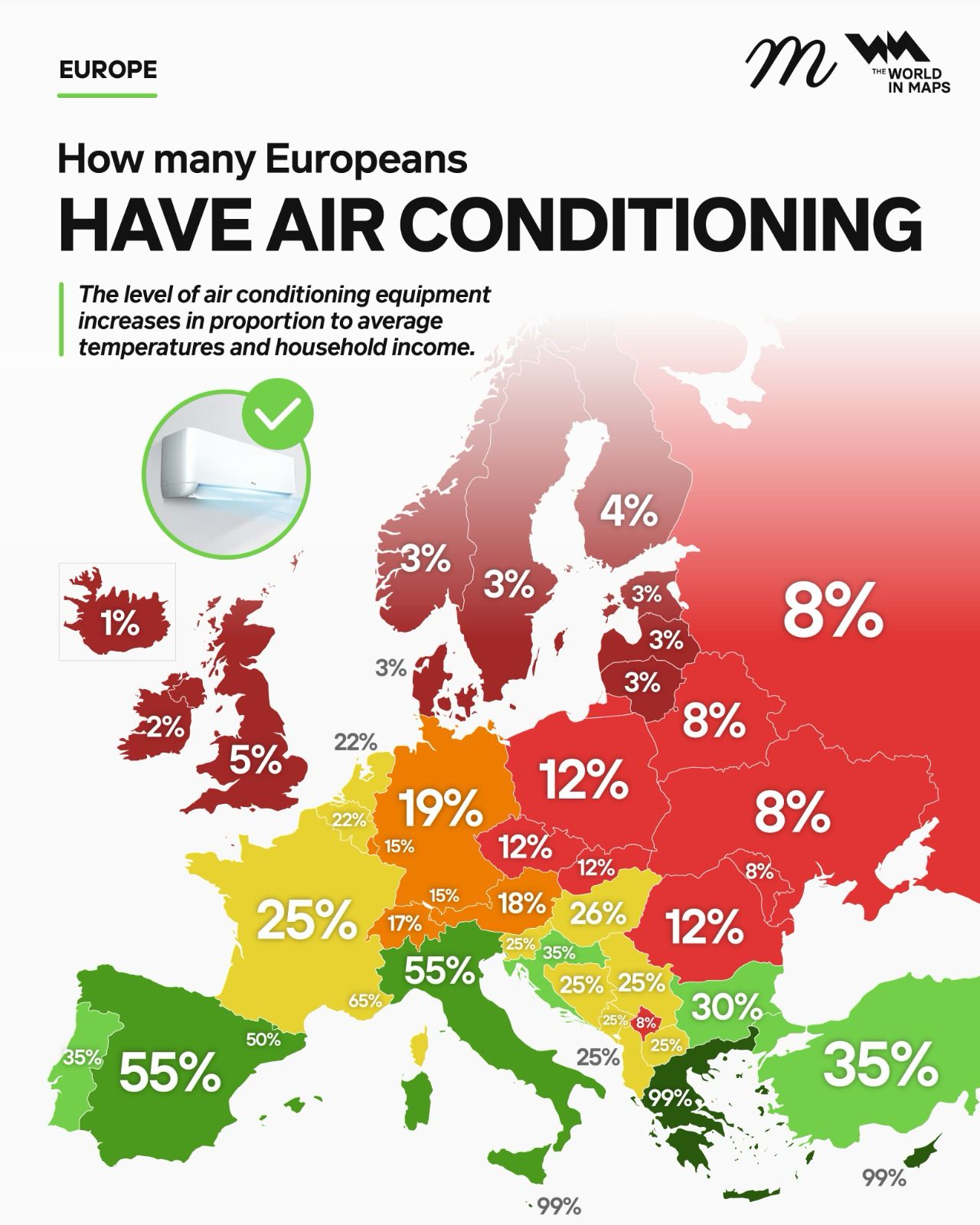
                      Not having any kids, living without air conditioning and not eating meat?

                      I've noticed people in developing countries have a skewed perspective of what life in developed countries is actually like and they have a culture shock when they move there.

                      • codeforafrica 2 hours ago |
                        Not having any kids, living without air conditioning and not eating meat?

                        I am not sure what your point is here: the social support system especially in europe makes it very easy to have lots of kids, so that would not affect the lifestyle. Air conditioning is not needed here in East Africa. And poor people here can't afford meat, but at least Germans and Austrians eat lots of meat. And I bet most people in developed countries eat more meat than the average African.

                        You are right that the view is skewed. But not on the specific points you mention. (except maybe kids, but as I said, those don't affect the lifestyle, and even here some women want less kids)

                  • codeforafrica an hour ago |
                    On paper, Netherlands, Germany and Sweden have some of the highest wealth inequalities in the world

                    Can you share the source for that? The one I am looking at right now claims that Germany is at the lower end of the income distribution of industrialized nations while the US, UK and Australia are at the top. The list doesn't include the Netherlands and Sweden, it does however include Norway where the difference is even lower than Germany: https://www.bpb.de/themen/soziale-lage/verteilung-von-armut-...

                    According to the same source the income difference in industrialized nations is not as large as in Africa though. While in Germany the top 10% of the population have 23% of the income and the income difference to the lowest 10% is 7%, in the US it is 28%, and the difference to the lowest is 18%, in African countries the top 10% of the population range between 30% and 50% (see the table on https://www.bpb.de/themen/soziale-lage/verteilung-von-armut-... . The text claims that the highest in South Africa is even 63%. At least one of these values is wrong. Sloppy reporting)

            • PorciiVorbesc a day ago |
              Both. Which business owner would invest in a poor high crime area knowing he has higher risks of getting robbed or things stolen meaning higher cost of insurance and policing your property, combined with a shortage of skilled workers since they all left for nicer areas?

              I've never seen areas recover from simultaneous capital and brain drain.

            • Ydarbleoj a day ago |
              White collar crime, especially corporate wage theft, is worse for society and by extension causes both.
            • WalterBright a day ago |
              Consider:

              1. the breadwinner for a family being in jail

              2. need to fortify your home with iron bars

              3. small businesses are driven out

              4. drug dealers on every corner

              5. anything and everything gets stolen or vandalized

              6. fear keeps people inside

              7. lack of trust

              and so on. Those all lead to poverty.

              • WalterBright a day ago |
                I would expect that aggressive enforcement of the law would reduce poverty.
                • dan_grec a day ago |
                  Indeed. But law enforcement exists to protect capital. Not much of that in poor neighborhoods.
                  • WalterBright a day ago |
                    The fundamental job of government is to protect rights.
                    • FromHoiPolloi 21 hours ago |
                      I don't think that's true. The fundamental job of an _ideal_ government would be to protect rights. What usually happens is - government wants to govern and needs (requires?) some level of order and stability. So enforcement is dialed up when order/stability is threatened. Also - the government will take away rights that (they) see as threatening order/stability. I, personally, like the metaphor with parents/children relations: "Parents are not interested in justice, only peace and quiet"
                    • PorciiVorbesc 6 hours ago |
                      The government only protects the status quo, itself.
                • watwut 15 hours ago |
                  Aggressive enforcement of the law is an euphemism for "abusive and violent police force" and for "police force that does not care about your rights, safety or justice". In that situation, rich people can defend themselves better then poor.
            • TeMPOraL a day ago |
              c) Feedback loop.
            • cryptonector a day ago |
              Poverty is the default human condition. Climbing out of poverty requires all sorts of things: desire and intent, knowledge, intelligence, being allowed to, and some help too (but not too much, as that ruins things). So what causes poverty is not as good a question as why are there pockets of poverty, and I think that's partly what you meant: that crime (and other things) keep people from making the progress that would lift them out of poverty.
            • chriswarbo a day ago |
              Does crime lead to wealth, or are the wealthy just inherently criminal?
          • LorenPechtel a day ago |
            And it doesn't even matter if the threat is real. I'm thinking of a neighborhood near where I grew up--lower end but an entirely reasonable place to live. Then a local rag started beating the drums about a cancer cluster and wouldn't shut up. Officials look--nope, no cancer cluster, no hazardous materials other than benzene coming out of tailpipes of clunkers--but lots of people with cancer living there. Because cancer costs and impairs income--they had moved there *after* getting cancer. Last I knew I wouldn't want to set foot in the neighborhood even by day.

            Likewise, EMF from power wires. Oops, no, it's *seeing* high power wires that matters, not the field strength.

        • andai a day ago |
          I have noticed this phenomenon in certain EU countries. The people with options (or indeed, standards) have already moved to Germany, Sweden, etc...
          • rcbdev 17 hours ago |
            I feel like you're being facetious, naming the exact two countries most Europeans would avoid like the plague when deciding to move.
            • krageon 12 hours ago |
              While both countries are known to be culturally reticent (something some people find an issue, especially if they are from further south), Sweden especially is viewed very positively as a place to live in every case I've heard it brought up
        • MrSkelter 12 hours ago |
          This is provocative but not well reasoned.

          Lead is a single factor in a constellation of issues.

          Primarily we cannot reliably measure intelligence. What IQ tests measure - and what they were designed for - is measuring how well a curriculum if understood by students. In effect the efficacy of schooling.

          In the US people in high leaf areas have very poor access to quality education and the resources needed to learn outside school.

          A better study would measure children in high and low lead environments within the same school and home environment (like a military academy or boarding school). It would still be imperfect for a host of reasons.

          • thaumasiotes 11 hours ago |
            > Primarily we cannot reliably measure intelligence. What IQ tests measure - and what they were designed for - is measuring how well a curriculum i[s] understood by students.

            This is... completely false. It can't even pass a laugh test if you look at some IQ tests.

            Take the standard reverse digit span test. "I'm going to read you some numbers, and then you repeat them to me in reverse order." Where does the curriculum come into it?

  • dzink a day ago |
    Europe restricts local farmers and industry from using these then proceeds to import much cheaper food from countries that have no such restrictions.
    • skywal_l a day ago |
      Because The EU is torn between the greens on one side and the neo-liberals on the other. The association of the two really looks like a conspiracy to destroy the EU.
      • wk_end a day ago |
        One side represents "the better angels of our nature", the other side represents (charitably) the need to actually get people fed, prosperity, or (less charitably) the enduring popularity of cheap shit.

        It's no conspiracy; it's the natural consequence of a democracy of man accurately reflecting the duality of man.

        • contravariant a day ago |
          We'd be a lot better at keeping people fed if we could wean people of of cheap shit.

          Just ban beef and we'd have so much more farmland. But nooo, people want to have their steak and eat it too!

          • sysguest a day ago |
            well the solution to this is simple: vet and mark all foods properly

            raw material coming from 'maybe chem-friendly' area/country/etc? mark as so.

            coming from organic? mark as so.

            if some food 'contains raw material that may have used certain pesticides' -- mark as so.

            • formerly_proven a day ago |
              Organic food actually consumes more land and water per unit of food than conventional. That’s in part why it’s more expensive. Organic food is hardly a suitable solution for the “keep everyone fed with limited and shrinking amount of fertile land and water” problem.

              Organic and sustainable are two different things.

              • z3dd a day ago |
                Not to disagree with you, but the phrasing is wrong I think. "Organic" food - or more like "conventionally grown" takes certain amount of space and time which you can cut by using pesticides and other chemicals that end up being not so great for us.
              • Telemakhos a day ago |
                Organic can be more sustainable with technology. There are now laser weeders that use vision-AI to identify and target weeds with lasers. This can replace herbicides, although it doesn't take care of fungal or insect problems; at least the amount of chemicals needed is reduced so far, and maybe future technologies will be able to eliminate chemical treatment of crops.
              • sysguest a day ago |
                if what you say about organic stuff is true...

                ...well that's what will appear on the price tag?

              • ahartman00 9 minutes ago |
                "The researchers conducted a meta-analysis of 115 studies — a dataset three times greater than previously published work — comparing organic and conventional agriculture. They found that organic yields are about 19.2 percent lower than conventional ones, a smaller difference than in previous estimates"

                https://vcresearch.berkeley.edu/news/can-organic-crops-compe...

          • badc0ffee a day ago |
            You may be surprised at how terrible cattle grazing land (at least in western North America) is for food production.
            • contravariant a day ago |
              It's not just the cattle grazing land, it's the land necessary to produce the feed as well.

              In the Netherlands at least the cattle is tacking up a large part of what would otherwise be perfectly fine framland. Though most of the soy used to feed them is produced outside of the EU I think.

              • throwup238 a day ago |
                The majority of the feed comes from marginal land too, just a step above pasture.

                At a microeconomic level it just rarely makes sense for someone to grow animal feed when products that humans want to eat are more valuable (in yield per acre). An acre of strawberries can sell for 10-100x more than an acre of corn for example.

                (I’m vastly oversimplifying since markets, mechanization, crop rotation, and local infrastructure make a huge difference too, but that’s the gist)

                There’s another wrinkle: A lot of feed comes from waste coproducts like distillers grain used for ethanol or soybean meal that is the leftover from soybean oil production.

          • gustavus a day ago |
            This is an ignorant and foolish assertion. Most often the land that is used for ranching and grazing is being used for ranching and graze specifically because it can't support other crops, thats historically always been the case.

            The following link discusses the issue at length

            https://acoup.blog/2019/07/12/collections-the-lonely-city-pa...

          • kyboren a day ago |
            You can't fight human nature. Humans like ungulate meat. They also like big cars and comfortable climate-controlled environments. We can debate the extent to which these are necessities--and eco-nazis frequently do--but the demand for those things will persist regardless. And governments that fail to supply those things cheaply will inevitably feel the heat.
            • lioeters a day ago |
              > eco-nazis

              My brain lost half its IQ just from reading this phrase.

        • spwa4 a day ago |
          You neglected to mention the net effect: total destruction of EU agriculture and industry while giving no real improvement in food quality and zero improvement in animal rights (in fact it's obviously deteriorating, certainly in freshness)

          Obviously many "accomplishments" in food quality, animal rights and the like. A LOT of people can now claim how good they are and how they personally "contributed" to nonexistent green targets and nonexistent animal rights (nonexistent animal rights because there are no more animals to enjoy those rights, you might as vote extra rights for magical ponies). And isn't that what really matters?

          You correctly point out what is gained: telling a lot of people who would never agree with each other that they both got what they want, and hence "electoral results".

          It's like people here don't even know how much Putin is paying ex-socialist leaders ( https://en.wikipedia.org/wiki/Gerhard_Schr%C3%B6der )

      • rbehrends a day ago |
        No, it is simply in the treaties. For example, Article 191 TFEU [1] encodes preserving the environment, protecting human health, and the precautionary principle.

        The free (and social!) market economy is set out as a principle in Article 3 (3) [2] TEU and Articles 119 and 120 TFEU [3].

        These do not exist in the treaties because the EU is torn between two wings; they (along with other provisions) largely exist because they were prerequisites for the member states to agree to give the EU legislative power by ensuring there were safeguards in place to limit that power.

        [1] https://en.wikisource.org/wiki/Consolidated_version_of_the_T...

        [2] https://en.wikisource.org/wiki/Consolidated_version_of_the_T...

        [3] https://en.wikisource.org/wiki/Consolidated_version_of_the_T...

      • mmooss a day ago |
        > The EU is torn between the greens on one side and the neo-liberals on the other.

        That omits the populist right, possibly the leading force in Europe.

      • lyu07282 a day ago |
        The green parties were always neoliberals too, their argument was always some version of saving the environment while also stimulating the economy. This is what Greta Thurnberg evolved away from and why today she makes fun of these environmentalist groups she was once a part of after recognizing how they are all just more neoliberals that will never actually do anything to address climate catastrophe.
    • 233mhz a day ago |
      Same with co2, regulate everything locally so we can't produce them anymore, then import them from god knows where. The co2 output is the same...
      • tonyedgecombe a day ago |
        This is a common talking point but it doesn’t hold much water. Imports represent a relatively small percentage of emissions. Most co2 output comes from buildings and transport.
        • 233mhz a day ago |
          duh yeah exactly? so why shoot ourself in the foot by letting someone else build these things while we could build them here in the first place if it wasn't for the regulations?

          We're losing jobs know how and industries to save the planet, except it produces the exact same co2, if not more, while introducing butt load of drawbacks...

      • nullc a day ago |
        > the co2 output is the same...

        no the transport makes it worse as does the coal fired industry rather than being powered by 50% solar.

      • legulere a day ago |
        There is the Carbon Border Adjustment Mechanism (CBAM) that ensures also imported goods are carbon priced. It even incentivizes other countries to introduce a carbon tax as well which several countries did in response.
    • vladms a day ago |
      The problem is that currently probably nobody can provide food that is cheap, good, healthy and available all year around.

      Then what are the options? Force people to eat healthy and expensive? Allow everybody to produce cheap and unhealthy? The current situation seems like a compromise: whoever cares and can afford will buy European stuff (more expensive, probably more healthy); who can't afford can still buy cheap stuff.

      Ideally, I would like stricter controls at the border, to eliminate some of the worst offenders. But even ignoring that, allowing lots of new pesticides in European soil (not that fields are not probably full of stuff already) will have direct cost on health care in the years to come.

      • seizethecheese a day ago |
        If you remove “cheap” can you have “good, healthy and available year round”? Obviously making food way more expensive would be terrible for most of the world, but for the rich world it seems like cheap food is just paid for in healthcare costs.
        • dragontamer a day ago |
          Yes. There are winter vegetables.

          It does mean going back to seasons and growing food that matches the climate. That being said, some places like Spain or Greece probably make foods year-round in a greenhouse.

      • petre a day ago |
        > Then what are the options?

        Bugs, obviously. But then the right wing wackos and the Dutch famers party that are pesticide addicts will start screaming that the EU makes us eat bugs.

        • PorciiVorbesc a day ago |
          How often do you voluntarily eat bugs? Why haven't you already started eating bugs, or are you waiting for the EU to make you as you claim right wingers say? Lead by example.

          You know what's funny, the African and Indian colleagues I talk to here in the EU say we're crazy. Their goal back home is to get out of poverty so they can use more energy and buy more and better things to make their lives easier and more comfortable: more private transportation, more meat consumption, more AC, more housing, meanwhile Europeans are doing everything to get out of prosperity to living in poverty: less kids, less and smaller housing, less meat consumption, less of everything, no-AC, as some sort of noble sacrifice for the benefit of everyone else but their own.

          They can't imagine living in one of the richest places on the planet and people not being able to afford to eat meat like they do back home in poorer areas of the world.

          • petre a day ago |
            I'd like to try some that were authorized as fit for human consumption, preferably not very processed, like precooked or dried actual bugs, but I haven't seen any in stores for obvious reasons. I saw some cricket chips sold as sports nutrition, but they were quite expensive, so I passed. I like to joke about it by calling 'em land shrimp.

            Anyway, those people advocating banning beef should eat some bugs every time they come up with these crazy ideas, trying to control other people's diets. Yes, we do like our steaks. So what? I'v been a vegetarian for four years. It was a stupid decision.

            You know, foxes and other small canine diets' include lots of insects. Why wouldn't mine?

            • PorciiVorbesc a day ago |
              >You know, foxes and otger small canine diets' include lots of insects.

              The diet of dogs also includes eating their own poop. I'd rather eat like a modern civilized human, not like a canine. But you go ahead.

              • petre a day ago |
                That's false. It's actually an eating disorder in some young dogs, mainly originating from kennels.
          • californical a day ago |
            > How often do you voluntarily eat bugs?

            When eating organic foods? Definitely sometimes, it’s just part of eating food and it’s not a big deal, I rarely notice and obviously take it out if I see a big one, but I’m not blind to the fact that by choosing organic foods I’m also getting a few bugs sometimes, it seems worthwhile to avoid the pesticides

            Note that the parent wasn’t saying to eat a bug burger, they were just saying by greatly limiting pesticides we have more bugs in our food

          • hsuduebc2 a day ago |
            The AC angle are just dumb memes coming from the US. There is not so many AC because it wasn't needed here. In south of Europe its literally everywhere, there we're simply not these crazy summers in the past. Almost all the points you mentioned are happening mostly because as advanced Europe is, it is also particularly more expensive. Your generalisation is based on some specific delulu marginal part of Europeans using very specific moralistic arguments.
            • petre a day ago |
              Actually in Germany some are quite against Klimaanlagen. They had an excess of deaths during the heatwave last June. If they're ready to die because of moralistic arguments, they should go ahead, I won't argue with them. Same goes with eating bugs.
              • rwyinuse a day ago |
                German environmentalist movement has been crazy for a long time, perhaps because they were a tool by KGB / FSB to get Germans hooked on cheap Russian energy, and to promote pacifism. Thankfully, Germany is not whole Europe. In most countries environmentalists are simply pro-renewables/nuclear, and don't oppose using that green energy for obviously useful things like air conditioning during heatwaves.
                • hsuduebc2 a day ago |
                  Exactly. Systematic radicalisation of absolutely deranged left wing extremists in Germany is seventy year's old Russian tactic. This is not new, only new thing is how Germans let themselves be fooled now.

                  They are The Ones I had in mind when writing my commentary.

                  • petre 18 hours ago |
                    The ruskys pay off both ends of extremists, not just lefties. They are also a net exporter of right wing wacko narratives.
                    • hsuduebc2 15 hours ago |
                      True, I should stated that more clearly. To be more precise, they steer these wackos in Western Germany in Cold War.
                    • PorciiVorbesc 7 hours ago |
                      >right wing wacko narratives

                      Such as? A lot of "whacko narratives" eventually got proven right.

            • PorciiVorbesc a day ago |
              >The AC angle are just dumb memes coming from the US.

              It's not a meme, it's a fact, and it's coming from me, an European. The fact is some EU countries (Austria, Germany, etc) have very high regulatory roadblocks to AC installations in city apartment buildings (where the need for AC in summer is highest since cities are hotter than the countryside or suburbs).

              And on top of that, some populations themselves, like Austrians, are so rabbid NIMBYS against AC installations they'll even call to report you to the local authorities simply to complain that you got an AC installed, and then inspectors come check your AC, "because a neighbour complained". It's like a crabs in a bucket because they've been brainwashed ACs are evil and if you install one it must be illegal.

              >There is not so many AC because it wasn't needed here

              I never said it wasn't needed in the past, I'm saying it's needed NOW, and some countries refuse to accept the new reality and cling on to the old times. Like that new hospital in germany which was built without AC and they had 30+ C in the operation room this past summer. Bonkers! Imagine the health hygiene/infection risks.

              A mate works at Siemens, one of Germany's richest companies, and they decided this year not no install central AC in the building, even though they had 30+ degrees in the office and people couldn't focus properly, because it would cost 300k Euros, the salary of a SV engineer. This Europoor "penny wise and pound foolish" mindset will be the death of us.

              >In south of Europe its literally everywhere, there we're simply not these crazy summers in the past.

              Heatwaves are everywhere now too, not just in southern Europe but some countries are dragging their feet when it comes to normalizing the installations of ACs in apartments with delulu moralizing justifications around "protecting the environment", even though ACs are heat pumps, which the same environmentalists champion for winter heating, but somehow they're evil when used for summer cooling. You can't reason with these people, and some countries are infected with them due to lies and propaganda.

              >Your generalisation is based on some specific delulu marginal part of Europeans using very specific moralistic arguments.

              I didn't generalize, I talked about what it's like where I live, as that's the relevant reality for me, so that's what I'm gonna mention it.

              • hsuduebc2 a day ago |
                Of course there would be some clowns using moralistic angle, but mostly it was simply not needed. It simply correlates with weather.

                But I agree, some people are just fucking stupid. In Southern parts of Europe there are AC's on buildings everywhere and I think this would happen in Northern parts too. This is just unbearably stupid.

                https://worldvisualized.codexcdn.net/assets/as23puvmakoJ6mrx...

                • PorciiVorbesc a day ago |
                  Do you have a source for that map? As it REALLY doesn't match the reality I know from living in some of those countries.
                • petre 17 hours ago |
                  The thing is, nost newer heat pump inverter ACs work great for heating too, not just cooling. And they can use clean electricity, as opposed to Russian gas.
        • mapcars a day ago |
          Its not obvious at all, for how long have bugs been a part of our diet? How many generations of people grew on it? I don't trust my life to some modern sponsored 5 year study
          • pretzellogician a day ago |
            Since prehistoric times. It's not part of the staple diet in all cultures, but for subsistence, humans would never turn up their noses at easy protein and calories.
          • hsuduebc2 a day ago |
            In Asia bugs are eaten regularly. It's absolutely safe to eat, it's just protein. Only people feel uneasy about bugs in general so they refuse to do so. Me included.

            Generations which grew in abundance of calories and nutrients are very novel too. Ultra processed foods too, yet a lot of people perceive them as "safe" even when they are literally poisonous.

            • pajko a day ago |
              • hsuduebc2 a day ago |
                Yes, living organisms can be infected by parasites or diseases that can be transmitted to humans if not properly treaded. Even if its beef, bugs, fish, chicken, eggs, milk or even lettuce.
        • zappb a day ago |
          Bugs aren’t kosher, but left wing wackos don’t consider that to be legitimate.
          • petre 18 hours ago |
            I'm not jewish either so I don't care.
      • Asmod4n a day ago |
        You can just move subsidies from corn to protein based food. Agriculture eats around 33% of all payed subsidies and 33% of that goes to corn.

        The food pyramid everyone gets shown at school is reversed to how it should be.

        • rrr_oh_man a day ago |
          THIS. Just replace corn with grain. (False friends)
        • Shitty-kitty a day ago |
          Buffalo wings are just as bad for you as Corn chips. It doesn't matter what you drown in butter/oil, cream or cheese.
          • dolorian a day ago |
            There's nothing at all unhealthy about butter or chicken. If you're lactose-tolerant there's nothing wrong with cream and cheese either.

            People get fat from excess carbohydrates. Corn is an awesomely abundant carbohydrate, and corn chips are often coated with delicious flavorings that make you want to eat tons of them.

            • Shitty-kitty a day ago |
              People get fat from excess calories from filling up with calorie-dense foods. Truth is that while your taste-buds guide you to calorie-dense foods the process that tells the body it ate enough is purely mechanical, how full the stomach is physically. Modern (slim) professional competitive eaters or beriartrich surgery are examples of how you can game the process.
        • primroot a day ago |
          > The food pyramid everyone gets shown at school is reversed to how it should be.

          Very interesting idea. Can you provide a source for the claim? Harvard's Healthy Eating Plate is currently among the most authoritative diet guidelines. It doesn't look at all like an inverted food pyramid to me.

          • black_puppydog a day ago |
            Might have been in reference to earlier versions of the pyramide, which exactly the Harvard team had been fighting against for a long time because of its overreliance on animal products (mostly meat but also dairy) and cereals.

            Edited for readability

        • rgblambda a day ago |
          Whatever the agricultural subsidy obsession is with corn in the U.S, it doesn't apply to Europe.

          Same goes for the food pyramid. While the concept of a food pyramid was invented in Sweden, they differ from country to country, so the one you've seen is not the one most Europeans have seen.

        • mullingitover a day ago |
          > The food pyramid everyone gets shown at school is reversed to how it should be.

          Good news: nobody has been shown a food pyramid in school for the last 15 years[1].

          [1] https://www.isu.edu/media/libraries/rural-health/microgreens...

        • mrguyorama a day ago |
          >The food pyramid everyone gets shown at school is reversed to how it should be.

          That food pyramid existed for 13 years only, and every single other diagram of food from the USDA has been basically the same in recommendation since the 60s:

          Eat different kinds of foods. Don't eat too much.

          Basically, if you are angry about that food pyramid, so were educators and everyone else and Fucking George Bush Jr who had it replaced the moment he could. I was explicitly taught it as an example of government corruption and poor incentives. In elementary school. If you treat it as anything other than a temporary stupid event, you are falling for hypertargeted propaganda. The cohort of people who were taught that pyramid but not taught a newer one or taught explicitly that it was bad was like a couple years of Gen Xers.

          Arguably the continued existence of milk in the myplate era should have gotten far far far more drama than the 90s pyramid.

      • GrantMoyer a day ago |
        > The problem is that currently probably nobody can provide food that is cheap, good, healthy and available all year around.

        We can, but we feed it to livestock instead of humans. Obviously, we'd want some improvement in quality control for human grade food, but the capacity is there.

        • pluralmonad a day ago |
          Corn and soy is not good human food. We have already shifted a huge proportion of grocery store shelves to these feed products. We would all be better off if we ate less of that stuff. Let the dorito fingers bring the donwvotes.
          • TFNA a day ago |
            Polenta has been a staple starch in Southern Europe for centuries (and indeed was regarded as superior to things like millet that were common before the Columbian exchange brought corn). Obviously one couldn't force it on a population not used to it, but corn works fine as human food.
          • ponector a day ago |
            Polenta, tofu are staple food as well as pasta and oats. Cheap, available all year round.
            • pluralmonad a day ago |
              Traditional foods made at home are not the same things as the boxes on our grocery stores. These two crops in particular are grown specifically to fatten livestock. In no world is that animal feed ground into boxes good food. Not to mention most commercially grown corn and soy is "round up ready". Yuck.
              • TFNA 20 hours ago |
                You think people are growing corn or soya in their own homes? People eating the foods mentioned by me and the other poster are buying them ultimately from agricultural producers. The "traditional foods made at home" come from "boxes at the grocery store".
                • defrost 20 hours ago |
                  > The "traditional foods made at home" come from "boxes at the grocery store".

                  Maybe yours are. That's not true for all by any means.

                  • TFNA 20 hours ago |
                    Do you know what polenta and tofu are? The first is milled corn where the corn was grown by some agricultural business, milled by some business, sifted into bags or boxes, and bought from a grocery store. Tofu is made from soy grown by some agricultural business, fermented, and sold packaged at a grocery store. The millions of human beings in the developed world regularly eating these traditional foods are not growing and processing their own grain.
                    • defrost 20 hours ago |
                      > Do you know what polenta and tofu are?

                      Yes. They're not my traditional food.

                      > The first is milled corn where the corn was grown by some agricultural business, milled by some business, sifted into bags or boxes, and bought from a grocery store.

                      For some. Last I checked there are still people growing corn and grinding it local to where they live and grow. Probably not near yourself though.

                      > The millions of human ... are not growing and processing their own grain.

                      Like yourself they also didn't closely read what I wrote either.

                      • TFNA 20 hours ago |
                        You wandered into a thread where the OP said that corn and soy are not fit for human consumption, when they are a perfectly ordinary and traditional staple for millions of people on earth -- and those people overwhelmingly buy it grown and processed by someone else. Your commenting about it not being your traditional food, or about some people somewhere growing corn themselves, is not relevant here.
      • drdexebtjl a day ago |
        >available all year around

        Since when did this become a standard? For our entire history, food was not available all year around. We ate seasonal food and preserved food for later. We mostly ate things that could be grown locally. Everything else was luxury.

        • WalterBright a day ago |
          The US was the first country to eliminate famine, in the early 1800s.
          • drdexebtjl a day ago |
            Using native crops and preserving enough food to last the unproductive months. That’s the point.

            Not by trying to eat chocolate, coffee and bananas year-round.

            • sznio a day ago |
              i mean, the first two are quite easy to preserve.
          • happymellon a day ago |
            Thats not quite the same as ensuring that everything is available all year round.
            • WalterBright a day ago |
              Elimination of famine also relies on a transportation network across the country, so food can be grown here and shipped there all year round as necessary.

              The 1800s in America saw a vast extension of railroads and canals which served that purpose.

        • vladms a day ago |
          I don't know, but is what I see that people expect. I tend to try to buy things grown in the season but 90% of people I talk about don't know/don't care.

          If you would force a large part of the population (by high prices, taxes, etc) without them understanding and agreeing to the reason, you would get a revolution and you would have failed.

          Maybe 30 years ago some rich nations could afford to buy thing all year long, and maybe at that time they were OK (less pesticides). And then more nations wanted that => hard to keep up with the production => more chemicals used => less healthy. This is just a theory, wanted to say that the desire might not have been inherently "evil" from the start, and we have to deal with the situation now.

        • TFNA a day ago |
          Who knows when it became a standard, but it is enough of a standard now that denying it could lead to social unrest, and that is the last thing the EU needs now. For years now, people have noted how the CCP has taken pains to keep pork affordable to its population: in the past most Chinese ate little meat, but once they got it, depriving them of it would risk explosion. Same thing with seasonal foodstuffs.
      • TeMPOraL a day ago |
        > Then what are the options?

        Expensive and perhaps limited import licenses, to force the everyday diet to come from locally grown crops and be seasonal. Prices for staples will stay low because market is a dynamic system so locally grown supply will quickly increase once it doesn't need to compete with cheap imports. Then the govts will have any chance of controlling methods and chemicals used in agriculture, too.

      • tancop a day ago |
        Genetic engineering, or keeping pests away with a physical barrier. You might still need pesticides but only in places that have an actual infestation.

        But I think a secure supply of cheap food is more important than preventing a minor health risk. And I would support engineering humans to tolerate these things better.

      • dwd a day ago |
        The quest to extend shelf-life and product appearance after extended storage rather than simply eating organic, locally grown wholes foods is a potential candidate cause for emerging issues such as the dramatic increase in colorectal cancer in younger people in the West.

        Synthetic or processed emulsifiers (carboxymethylcellulose, polysorbate-80, etc) are increasing being linked to changes in the gut microbiome and inflammation triggering.

        https://pubmed.ncbi.nlm.nih.gov/40816342/

        https://pubmed.ncbi.nlm.nih.gov/34774538/

        https://pmc.ncbi.nlm.nih.gov/articles/PMC7986288/

        https://www.nature.com/articles/s42003-024-06224-3

    • otherme123 a day ago |
      You implying that Europe allow the importing of anything, and that is not true. People from other countries need to also have minimum standards to be able to sell in the UE. And they of course need to comply with the same standards than UE producers to stamp tags like "bio", "eco" or "fair trade".

      A clear example: eggs from the US (cleaned) cannot be imported to the UE, and viceversa.

      https://food.ec.europa.eu/horizontal-topics/official-control...

      • guywithahat a day ago |
        Eggs are a very famous example where the US and EU independently decided to have diametrically opposed standards for egg safety, and so they can’t be exported to each other.

        Most foods have a more board set of safety requirements, and won’t face the same high level of scrutiny as locally produced food.

      • supermatt a day ago |
        Sure, but those minimum standards differ. For example, in the EU certain pesticides are outright banned, but those same pesticide made foods are permitted for import if they are below certain non-zero levels. We also have very strict animal welfare standards, which do not apply to imported meat products.
        • otherme123 a day ago |
          A pesticide might for example be banned in UE for aquifer/stream contamination, but if a non-UE country is OK with polluting their own waters the UE won't ban the use on field, just limit the amount found on product.

          Animal welfare is in the same pack of "bio" or "eco" products. There are "welfare approved" seals, and consumers are the ones to decide. E.g. I only buy eggs of maximum welfare (coded as 0) or the next (coded as 1), and yes, I am aware of some problems with the code but is the best we have now. I know a lot of people that does the same, or at least who avoid eggs marked with 3 (caged hens).

          • supermatt 16 hours ago |
            On the use of pesticides in general, that is mostly true - it is often (but not always) for ecological reasons they have been banned if we still allow threshold contamination in food for human consumption. However not being able to use those same pesticides locally puts local farmers at an economic disadvantage - which is what the grandparent comment you were responding to was saying.

            There are no official EU-wide "welfare approved" seals. The EU organic logo (the green leaf) is probably the closest - but in order to meet that they would need to meet all the other organic standards in addition to (stricter than the EU-minimum) welfare ones. i.e. there is no welfare-only route for approval.

            In short - there is a (substantial) cost associated with not using these pesticides and having to maintain animal welfare standards that is not imposed on imported produce.

  • Sharlin a day ago |
    Can't be "competitive" in this world without being prepared to break a few eggs. Or that's what the neoliberals claim.
  • andrewclunn a day ago |
    I think the notion that agriculture and industry are two separate categories is a relic that doesn't really hold in the 21st century (and honestly for part of the previous one as well). The small scale "family farm" is almost non-existent now. If true factory farming is going to be the standard, then they should be seen as similar to any other factory, and pregnant women and young children should stay away for fear of the resulting impacts on development.
  • kleiba2 a day ago |
    > If you are ill, [...] it is because you did not lead your life properly. [...] And if not, perhaps the problem lies in your DNA, or you were simply unlucky.

    We're off to a good start, Cpt. Obvious!

    • PorciiVorbesc a day ago |
      I think the author meant it sarcastically. It helps if you read the entire paragraph from start to finish, you get a feel of the tone. I think the author does a good job of being subtle that some people miss it on the first read.
    • KolmogorovComp a day ago |
      not detecting sarcasm makes you the Cpt. Obvious. Reading past the first sentence may have helped you understand it.
  • londons_explore a day ago |
    > a European child born in 2010 lost, on average, about 2.5 IQ points,

    I suspect a loss of 2.5 IQ points is enough to tank an economy. Any data to confirm or refute my hypothesis?

    • Squarex a day ago |
      I wonder how they meassured it. There are plenty of other explanations for IQ loss.
    • dgellow a day ago |
      Aren’t you expected to be the one coming up with something to back your hypothesis?
    • maxerickson a day ago |
      US lead exposure estimates are higher than that, peaking in the 60s.

      I guess if you think economy bad or not you can use that evidence either way. Realistically, there has been enormous growth in the US economy in the last 30,40,50 years.

      • kube-system a day ago |
        I suspect in the scheme of things, average IQ of a population has very little to do with overall economic output or growth.
    • coryrc a day ago |
      Trump voters and the economy now.
  • PowerElectronix a day ago |
    [flagged]
    • croes a day ago |
      It’s really a shame that companies in the EU can’t give a crap about people like in China and the US.

      More sick and death people would also mean more profit for pharmaceutical companies and less unemployment.

      A win-win

    • fcarraldo a day ago |
      I don’t understand this post. The article describes the EU weakening regulations in order to relax the burden on industries. It also describes that scientific consensus has strengthened since the regulations were put in place, and the consensus is that these chemicals are harmful to the population.

      The takeaway is supposed to be that the EU’s regulation schemes are working (for the people) but are being dismantled due to right wing politics and industry pressure.

      How did you get nearly the opposite?

      • patrickmcnamara a day ago |
        You're not gonna find people being rational about the EU on HN.
      • LorenPechtel a day ago |
        And where does this article say it's a scientific consensus? It's one report.
      • PowerElectronix a day ago |
        The burden on certain very particular players that have probably lobbied the lawmaker into getting their way.

        What I meant is that the UE is still polluting and allowing harm come to their citizens because either the products they allow in come from unregulated countries or they just make up some excuses to allow it like counting natgas as a green energy or allowing more of these substances in their products.

        It's supposed to be the bloc where regulation handles and manages every bad aspect that may affect their society, but in practice all they do is strangle their industry and people while having nothing to show for it in renewables or actual protection to their consumers.

    • oulipo a day ago |
      EU is one of the biggest commercial power today. It's also a (relative) beacon of dialog, diversity and democracy compared to the sorry state of the rest of the world.
      • tsss a day ago |
        The EU is far from democratic.
        • oulipo 15 hours ago |
          Still the most democratic when compared to... all the rest?
      • CrimsonRain 17 hours ago |
        Beacon of dialog where you get police visits for "politically incorrect" speech :)
    • tomhow 15 hours ago |
      Please don't post ideological flamebait about nations or political unions on HN. The guidelines make it clear we're trying for something better here. https://news.ycombinator.com/newsguidelines.html
  • motbus3 a day ago |
    Make life expensive. Them blame people for not buying healthy food
  • adamddev1 a day ago |
    What about vinyl flooring? The FDA is doing a long investigation on a key ingredient, and the EU has already placed PVC on a "restriction roadmap." It gives some people headaches and other symptoms. But sadly it keeps getting installed in houses more and more.

    https://europe.noharm.org/news/eu-has-legal-duty-ban-pvc-ngo...